Roasted Beets has become one of our favorite side dishes. The first time I roasted beets myself was several years ago after purchasing Ina Garten’s cookbook “Barefoot in Paris”. Before going Paleo it was one of my favorite cookbooks. In fact, I liked it so much I stood in line for quite a while to meet Ina and have her sign my copy. See, I’m seriously a fan!
There are still a few recipes in that cookbook that fit with a paleo diet and roasted beets is one of them.
I love beets. See how gorgeous they are. I think they like having their photo taken.
When I initially made this recipe I referred to it as a clafoutis. But it turns out a clafoutis is a rustic French dessert traditionally made with black cherries. Whenever the same dish is made using a different type of fruit it is known as a flaugnarde. Here’s how to pronounce flaugnarde. I had to play that soundbite a few times to get the pronunciation down (in spite of my slight Texas twang). It’s a funny word that sounds a lot better than it looks. And the dish itself is delightfully warm and filling.
This flaugnarde recipe makes use of Korean Shingo pears. These pears are similar to other asian pears but they are larger and very round. (You could substitute with other types of pears or even apple slices.) The Shingo pears have a high sugar content and a delicate, almost floral taste. They are nicely crisp and would probably be terrific in a salad. But they also work particularly well with this flaugnarde which is perfect as a breakfast or brunch dish. It is not a particularly sweet dish but could still be used as a dessert. If you like custards and/or bread puddings like I do then you will probably enjoy this moist flaugnarde. The 1/4 cup of coconut crystals is optional. I tried it both ways and it was good each time – just a little sweeter with the coconut crystals.
A slice of the flaugnarde for breakfast with a couple of farm fresh eggs fried in ghee is pretty heavenly. My sons, who eat dairy, like to slather it with full fat Greek yogurt.
While perusing the fish options at Whole Foods recently, my attention was captured by the trout. According to the powers-that-be at Whole Foods (or whomever wrote the little note in front of each fish variety at least), trout goes great with sage, citrus and bacon (BACON!!!). Ordinarily I think of fish as requiring more delicate flavors. In fact, when I was living in Italy I distinctly remember the passionate view of my Italian roommates who insisted you should never, NEVER combine fish with cheese in recipes. (I did not entirely agree with that, by the way.) The given reason for this “RULE” of Italian cooking is the flavors of fish are much too delicate to withstand the strong flavor of cheese. Strong flavors supposedly overpower fish. So when I saw the bacon recommendation for trout I was intrigued. Who is this fish that defies such a universal truth?
I snapped up a couple of pounds of trout and determined to further investigate this culinary conundrum.
Another reminder of my former life in Italy was the gorgeous blood oranges I found in the produce section. Hmmm. Blood oranges qualify as citrus. I added them to my cart and began to formulate my plan for an amazing paleo fish recipe.
The Chocolate Chip Cookie Dough Larabar is one of my youngest son’s favorite treats. As you may know, Larabars are not cheap. In spite of the price, I have been buying them occasionally because I want to make my Sweet Pea happy. I am often incapable of resisting his charms. (Could you resist this face?)In order to save some money I finally decided to try making them for myself. I’m happy to report it turned out great. You may have already seen my post on Homemade Coconut Cream Pie Larabar which is another one of our favorites. This recipe is similarly simple. It contains only 3-4 ingredients and is very quick, easy and delicious. These bonbons are great as a snack or treat and make a sophisticated dessert offering for a party.
This recipe for apple cider paleo donuts is inspired by the amazing apple orchards in my adopted state of New Jersey. Apple cider donuts are commonly found at farm stands, primarily in the autumn, and usually accompanied by glasses of hot apple cider. Contrary to its image, New Jersey retains its rural and agricultural flavor throughout much of the state. (It is known as “The Garden State” after all.) The apple industry here is vibrant and farms have survived development and other economic pressures by promoting orchards as educational and recreational experiences. Consumers contribute to the preservation of the farming heritage by patronizing local farms. Farms in turn have used festivals, school tours, u-pick operations along with roadside retail to survive and thrive by meeting consumer demands. We enjoy patronizing local farms and have always looked forward to indulging in cider donuts when visiting them. This recipe for cider paleo donuts allows us to enjoy this treat while sticking with our paleo diet.
My husband was initially shocked at the sight of my newly purchased mini-donut maker. He thought I had really gone off the deep end. (Oh, he of little faith!) But in spite of his skepticism, these donuts are grain-free, gluten-free, casein-free, soy free and contain only natural sugars. So I consider them a bonafide paleo treat. And these paleo donuts go great with some eggs and coffee at breakfast. You can also serve them as an after school snack. (Something my boys love.) They are fairly quick and easy to make – you don’t need to drag out your stand mixer. And the $20 for the mini-donut maker seems like a worth while investment.
The Pioneer Woman’s Burgundy Mushrooms is an absolutely delicious recipe. I add my voice to the chorus of folks who agree this is one tasty side dish. With a few modifications it is also a great paleo side dish. A BETTER Burgundy Mushrooms recipe, if you will. I served it this past Christmas to rave reviews. … Read more
When I told my oldest son I was roasting some bones in the oven he looked at me sternly for a few seconds before exclaiming, “Mom, you just keep getting weirder and weirder!” I suppose from the perspective of a 10 year old, the idea of roasting bones, then “painting” them with tomato paste (a bit of a macabre-looking scene to be sure) and then simmering them in a cauldron, um, I mean crock pot, sounds a bit bizarre. But in spite of appearances, there is a method to my (seeming) madness.
In the post How to Make Chicken Stock in Five Minutes I touched on some of the health benefits of eating bone stock. It’s a great “whole” food few of us incorporate into our modern diets. Health benefits are one thing, but when you experience the exquisite flavor of real “brown” beef bone stock you will understand just how worthwhile it is to make it yourself. Store bought stock will never have the same rich flavor and certainly not provide you with the full health benefits.
This recipe is based on one from Emeril Lagasse. I have tweaked the quantities, eliminated the wine and thyme, increased the cooking time and included vinegar to pull the minerals out of the bones for maximum health benefit. You could make bone stock without roasting the bones but it would not have quite the same rich flavor. The process of browning the bones makes for a sophisticated flavor that is beyond compare. This is a classic method chefs use to obtain maximum flavor from bones for use in stocks and sauces.
The recipe makes a fairly significant amount of mineral rich, delicious bone stock which means the invested time and money is well worth it.
Ghee, also known as “clarified butter”, “butter oil” or “drawn butter”, is delicious, healthful and fits in well with the Paleo diet. Many people have immune reactions to the milk solids (lactose and casein) in dairy products and may not even realize the source of the problem. This, among other reasons, is why the Paleo diet generally eliminates dairy. (I recommend trying a 30 day elimination period such as the one outlined in the Strictly Paleo Plan to help determine your tolerance of dairy products.)
Even if you find you need to avoid dairy, most likely you can still enjoy ghee. Ghee is butter that has had all the water and milk solids removed. It is somewhat different from clarified butter in that the process of making ghee involves toasting the milk solids resulting in a nutty, rich flavor. Unlike butter, ghee has a long shelf life and can be used for high temperature cooking. It is also not as difficult to make as you might think.
Make Ghee, Feel Like Wonder Woman
The Health Benefits of Ghee
A tablespoon of ghee contains 8g Saturated fatty acid (SFA), 3.7g Mono-unsaturated fatty acid (MFA) and 0.5g Poly-unsaturated fatty acid (PUFA). Saturated fat, contrary to what you might have learned, is not an evil menace directly responsible for heart disease. (See this post and this abstract from “The American Journal of Clinical Nutrition”). Mono-unsaturated fats (also known as oleic acid) are the main structural fats of the body and are non-toxic even at high doses.
Ghee is also rich in fat soluble vitamins like A, D, and K2, as well as CLA (conjugated linoleic acid). CLA is an essential fatty acid found almost exclusively in grass-fed animals and may protect against cancer, heart disease, and type II diabetes. To get the benefit of CLA from butter and ghee, I strongly recommend you purchase varieties from pastured (grass-fed) animals. Using organic butter will also ensure you are avoiding hormones and pesticides that may find their way into your ghee.
Here are a couple of brands of pasture butter I use:
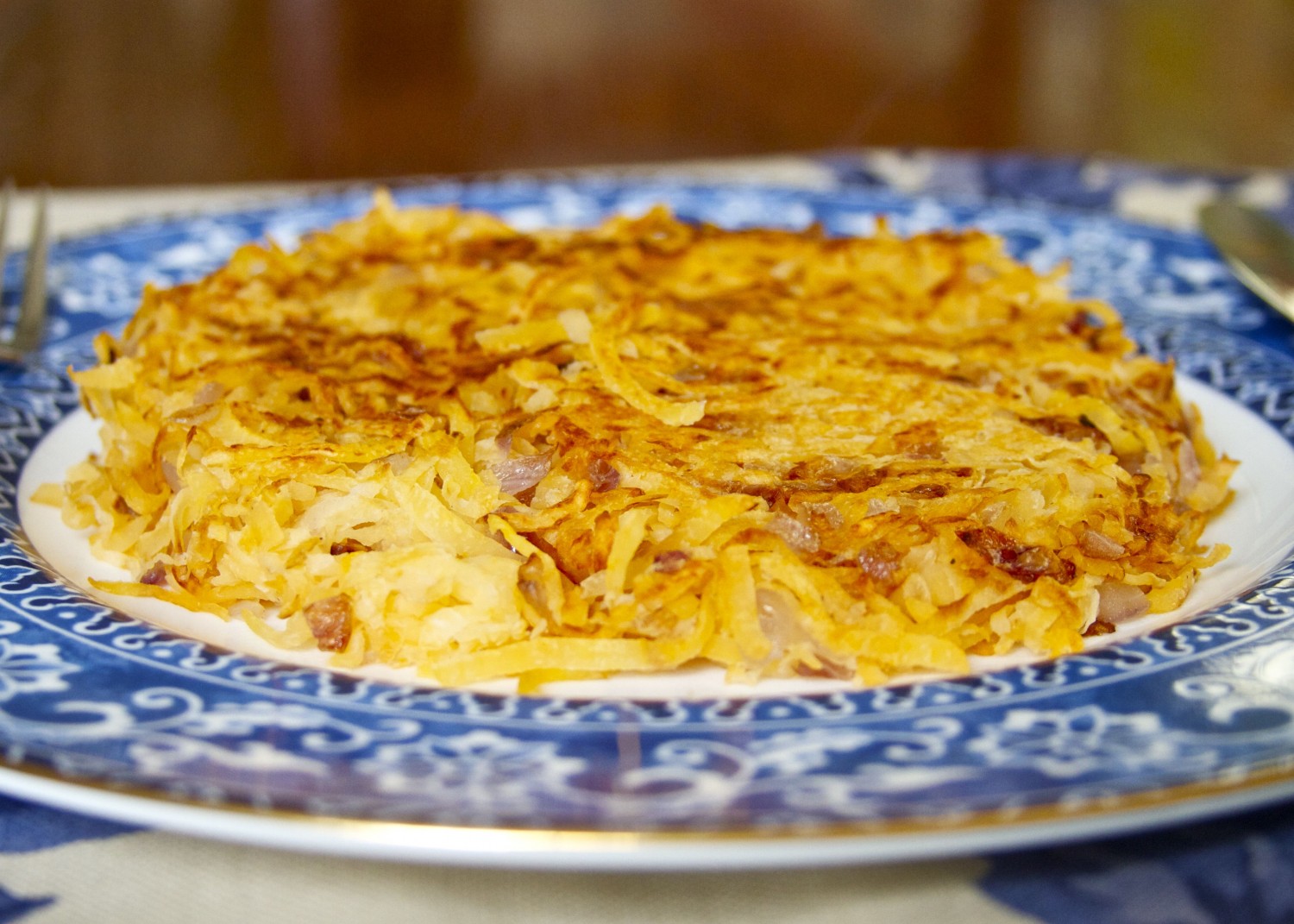
The “Turnip Hash Browns” were so good I went to the grocery store again (a different one) searching for another turnip. The one I found looked similar – slightly larger and more yellow – and the sticker said “Rutabaga”. Having eaten both turnips and rutabagas, I knew rutabagas are typically more yellow than turnips. So the darker color of this one made sense to me. When I continued to look for turnips I only found some smallish, bright white and purple turnips that were not waxed. So I went ahead and bought the rutabaga thinking I could easily make the same hash browns recipe with it. Once it was shredded I noticed, even though it was slightly more yellow than what I thought was a turnip, it tasted EXACTLY the same. So I posed the question on the Paleo Spirit Facebook Page and was met with a link to an article called “Turnip or Rutabaga?”In spite of having Googled the question myself, this particular post mentioned that rutabagas are sometimes called “Waxed Turnips”. That answered my question. What I thought was a turnip was actually a rutabaga (also known as “Swedish Turnip”, “Swede”, “Yellow Turnip” and other terms.) Egads!
Do you aspire to be one of those people who plans ahead? Would you like to have your weekly meals all laid out in advance? While I know it would save me time and money to do that, the fact is I am not especially talented in this area (can you say ADD?). The following recipe for Rutabaga Hash Browns with Pulled Pork is an exception. Breakfast on the Paleo diet can be a tough transition because we are so used to eating some type of grain in the mornings. But while this recipe will not solve all weekly meal dilemmas, a few quick steps the night before and you will be minutes away from an amazing, delicious, nutritious and inexpensive breakfast the next day.
On a whim (see how I don’t plan!) I bought a waxed turnip. (I previously titled this post “Turnip Hash Browns with Pulled Pork” because I was a little mixed up about the terms. See explanatory post.) According to my crumpled receipt, which I just fished out of the bottom of my purse, I paid $1.52 for this 2.21 lb purple and white beauty. It is lower in overall calories and carbohydrates than white potatoes but high in vitamin C. Before I went to bed I peeled it and put it through the shredder on my food processor. (You could use a box grater.) It went into a big container and then my refrigerator. I ended up with about 7 cups of shredded rutabaga.
Next, I rubbed a 3 lb boneless pork butt (cost me $6) with some Tsardust Memories Russian Style Spice Seasoning from Penzey’s. It’s one of the spices I got on my recent trip to a Penzey’s retail store. It’s not critical that you use this exact spice. I was just experimenting and thought it might work well and it did. I also don’t remember the exact measurement but I basically covered the pork in a light layer. (Maybe 1 tablespoon?) The Tsardust Memories mix contains the following spices: salt, garlic, cinnamon, black pepper, nutmeg and marjoram. I added about a 1/2 cup of chicken stock (you could use water) and cooked it on low heat overnight.


 Roasted Beets has become one of our favorite side dishes. The first time I roasted beets myself was several years ago after purchasing Ina Garten’s cookbook “Barefoot in Paris”. Before going Paleo it was one of my favorite cookbooks. In fact, I liked it so much I stood in line for quite a while to meet Ina and have her sign my copy. See, I’m seriously a fan!
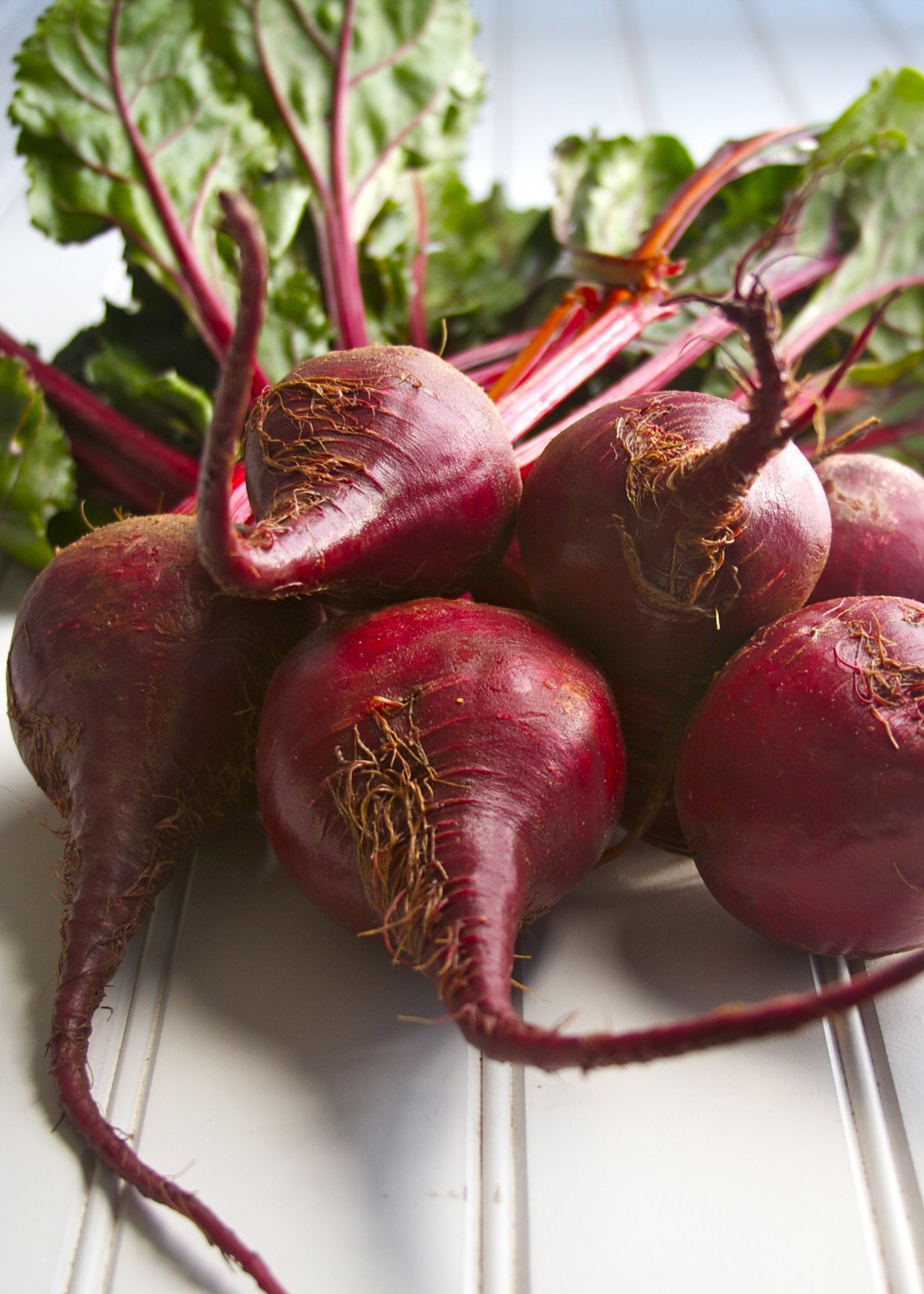 I think they like having their photo taken.