Paleo FX 2012: Opening Night

I just returned from an exciting trip to Paleo FX in Austin, TX, March 14-17. Rather than writing one huge tome about my experience, it makes more sense to break it up into pieces. So I will start by simply explaining the nature of the event with some photos of some of the cool people in attendance on opening night. In future posts I can get into more details about the presentations and fitness sessions. If you want to know more about it right away, there are several great write-ups already posted in the paleo blogosphere. (Check out this post and video).

The PaleoFX Ancestral Momentum – Theory to Practice Symposium was a multi-day, hands-on event. It was a collaboration among fitness and healthcare professionals, nutritionists, research scientists and laypersons seeking to address modern health challenges through the application of ancestral based theory in practice. In other words, lots of folks with different backgrounds got together to explore how to put paleo diet and fitness information into action in a practical way. It was held at The Stark Center for Physical Culture and Sports on the campus of the University of Texas – Austin. As a graduate of staunch rival Texas A&M Universitythis was a slight conflict of interest for me! The Stark Center overlooks the football field and I felt like I was in “the belly of the beast” so to speak.

Texas Memorial Stadium

Read more

In love with LOVEBEAN Fudge

While back in my home state of Texas for the Paleo FX Symposium – Theory to Practice in Austin, March 14-17, I encountered LoveBean Fudge.

It was a magical meeting. (The symposium was good too….)

The husband and wife team behind LoveBean are huge believers in high-density super foods. Together they have created some chocolate products that are really nutritious and absolutely delicious! One thing that caught my attention about LoveBean Fudge is the fact it is made with organic coconut nectar instead of evaporated cane juice. I have used coconut nectar or coconut crystals in several recipes, such as Paleo Coconut Cream Pie and Paleo/Primal Chocolate Cheesecake. I even use it in my popular Paleo Pancakes recipe. Coconut nectar/sap is very low glycemic (GI of only 35), is an abundant source of minerals, 17 amino acids, vitamin C, broad-spectrum B vitamins, and has a nearly neutral pH. Some may argue there is not much difference between cane syrup and coconut nectar. But even if the insulin response to either form of sugar is largely the same, I would choose coconut nectar for the added nutrition and the unique and delicious flavor.

Here’s Sweat Pea eating some LoveBean Fudge. Hmm. Funny but he doesn’t seem to notice the insulin response! (And BTW Austin DOES rock.)Sweat Pea loves the LoveBean

Read more

Paleo Chipotle Chili

Paleo Chipotle Chili

Posting a recipe for Paleo Chipotle Chili today seems especially appropriate. I am traveling back to my home state of Texas for the Paleo FX Symposium 2012 in Austin. It was an early morning for me today, beginning with my 3:30 a.m. alarm, but made better by the pink sunrise highlighting the dark Manhattan skyline … Read more

“Food Activist” or Freedom Fighter?

This is not a political blog. Paleo Spirit is primarily a food blog that emphasizes the paleo way of eating and a healthy lifestyle that explores ways to improve “fitness” in all areas of our life – mind, body and soul. I want to be welcoming to people of all different persuasions and I know there are some readers who will be turned off at the mere mention of something that falls into the political realm. However, I had an interesting experience that I would like to share. And in my opinion this discussion could be categorized under “mind” because we should all make ourselves as educated as possible in order to navigate effectively in our world.

There is so much that goes on in politics that affects our lives and that includes how much control the government exercises over us. I am a strong believer in freedom and individual responsibility. And one of the ways we can lose freedom is when the government has enough power to tell us how and what to eat. For those of us who have seen and experienced the negative results of following the “Conventional Wisdom” of healthy eating, as espoused by the U.S. government (low-fat, high carb, etc…), we can attest to the fact government does not always know best. And this is not a liberal or conservative issue, it is a life or death issue.

I was motivated to call The Rush Limbaugh Program on March 9th because I heard him quoting, at length, from an article written by heart surgeon Dr. Dwight Lundell. “Heart Surgeon Speaks Out On What Really Causes Heart Disease”  In the course of quoting Dr. Lundell, Rush Limbaugh also expressed his view that it is liberal “food activists” who are imploring the government to “step in and save us” by implementing regulations that seek to alter our freedoms by positioning themselves as our “guardians”. Later in his remarks, Mr. Limbaugh pointed out the importance of individual freedom in the realm of dietary choices. I knew I wanted to call the program to let Rush know there are those of us who might consider ourselves “food activists” in a sense and yet do not seek to force our views and dietary decisions on others. We seek to educate and, in some cases, advocate for change in government activities.

Think about whether or not you are in favor of laws banning the sale of raw milk. And note how government subsidies of the corn industry change the marketplace and consider those ramifications. Then there was the recent story of the pre-school girl whose homemade lunch (turkey and cheese sandwich, chips, banana and apple juice) was inspected and deemed unsatisfactory by school officials. This child was forced to purchase the “more nutritious” school lunch which consisted of chicken nuggets! Regardless of your personal views of her homemade lunch, do you really want the government mandating what a child must be fed? Adherents of the paleo diet choose not to eat grains. Do you really like the prospect of the government forcing you to feed your child “whole grains” because it is supposedly “healthier”? I certainly do not!

It is a freedom issue, pure and simple.

Read more

Dose of Beauty – Solitude

“Laugh and the world laughs with you; Weep, and you weep alone….” 

The poem “Solitude” by Ella Wheeler Wilcox (below in its entirety) is a powerful exploration of an undeniable reality of human nature. There is a natural desire to seek out that which exudes happiness and cheer and to avoid pain and darkness. It extends to our tendency to gravitate toward other people who are joyful and happy and full of positive energy. This is not necessarily a bad thing. In fact, I think it is healthy to surround ourselves with people who are positive and encouraging and exhibit love, joy and peace. No one wants to be around those who are constantly negative, cynical, sarcastic and depressing. So in one sense, this poem is a clue to the reality that others are attracted to us if we endeavor to be cheerful and positive rather than negative and gloomy.

But understanding this truth of human nature also informs us we should not ignore those around us who are hurting. Even though our natural tendency is to seek out joy and happiness and people who exude those things, the reality is we should cultivate within ourselves a desire to help others in their time of need. We all go through difficult times and need help from others who are in a stronger place in their lives – people who can reach out to us and draw us out of depression, grief or other pains.

Ella Wheeler Wilcox emphasizes the uncaring world by exploring not only how we humans often flee from those in pain, but how the earth itself is indifferent to human suffering:

Read more

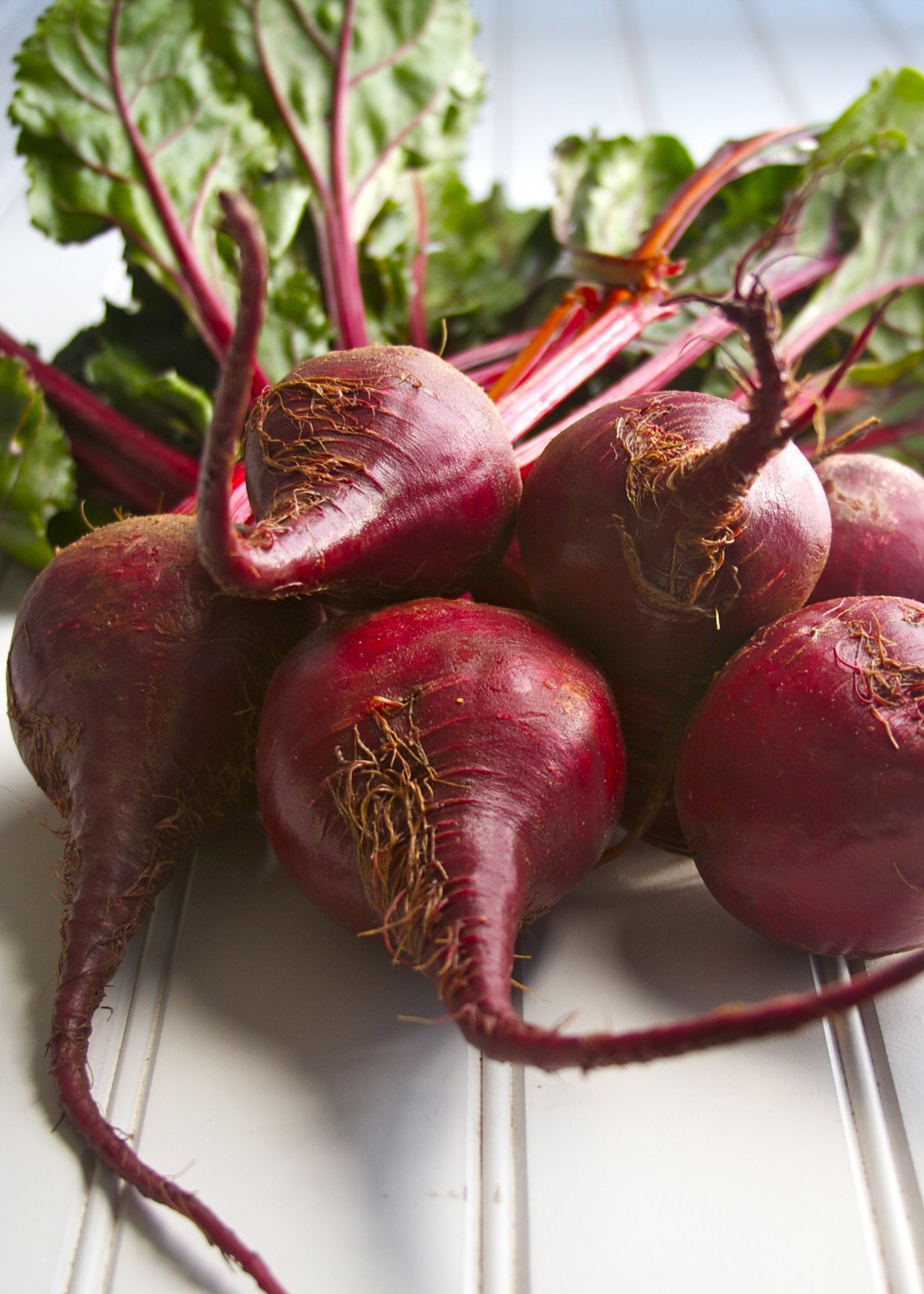
Roasted Beets with Blood Oranges

beets and blood oranges

beets and blood orangesRoasted Beets has become one of our favorite side dishes. The first time I roasted beets myself was several years ago after purchasing Ina Garten’s cookbook “Barefoot in Paris”. Before going Paleo it was one of my favorite cookbooks. In fact, I liked it so much I stood in line for quite a while to meet Ina and have her sign my copy. See, I’m seriously a fan!

There are still a few recipes in that cookbook that fit with a paleo diet and roasted beets is one of them.

I love beets. See how gorgeous they are. red beetsI think they like having their photo taken.

Read more

Healthy, Not Unholy – Part Two

In Part One of “Healthy, Not Unholy” we discussed the benefits and importance of physical fitness. Specifically, that exercise is important for physical and emotional health, how it teaches discipline and can contribute to our confidence. Today, I want to outline the potential downside to making physical fitness an important part of our lives.

To understand how the pursuit of physical fitness and attractiveness can potentially lead one away from God, it  is important to understand the meaning of the word “idolatry.” Idolatry is one of those words that immediately stokes the imagination. It may bring to mind images of ancient civilizations and mystic ceremonies where people dance around large statues and make violent sacrifices to strange and exotic deities.

Ok, ok….sometimes I let my imagination get away from me….but while what I described is accurate, it is not the whole story. According to the dictionary, the primary meaning of idolatry is “the worship of a physical object as a god.” As Christians, we do not acknowledge the existence of any deity but the God of the Bible. Therefore, it is accurate to label the worship of another supposed supernatural being or physical object as idolatry.

And God takes a very dim view of idolatry. In fact, He considers it sinful. We know this because He told us so several times. For example, in the Old Testament book of Exodus, His dislike of idolatry is revealed to Moses as the 1st Commandment:

Exodus 20:2-3

I am The Lord your God, who brought you out of the land of Egypt, out of the house of bondage. You shall have no other gods before Me.

Remember, God gave Moses 10 Commandments, but the very first one describes His view of idolatry! In verse 5 of the same chapter of Exodus, God elaborates further:

Exodus 20:5

5 You shall not bow down to them or worship them; for I, the LORD your God, am a jealous God, punishing the children for the sin of the parents to the third and fourth generation of those who hate me.

Read more

Korean Shingo Pear Flaugnarde (Clafoutis)

flaugnarde slice with yogurt

flaugnarde slice with yogurtWhen I initially made this recipe I referred to it as a clafoutis.  But it turns out a clafoutis is a rustic French dessert traditionally made with black cherries. Whenever the same dish is made using a different type of fruit it is known as a flaugnarde. Here’s how to pronounce flaugnarde. I had to play that soundbite a few times to get the pronunciation down (in spite of my slight Texas twang). It’s a funny word that sounds a lot better than it looks. And the dish itself is delightfully warm and filling.

This flaugnarde recipe makes use of Korean Shingo pears. These pears are similar to other asian pears but they are larger and very round. (You could substitute with other types of pears or even apple slices.) The Shingo pears have a high sugar content and a delicate, almost floral taste. They are nicely crisp and would probably be terrific in a salad. But they also work particularly well with this flaugnarde which is perfect as a breakfast or brunch dish. It is not a particularly sweet dish but could still be used as a dessert. If you like custards and/or bread puddings like I do then you will probably enjoy this moist flaugnarde. The 1/4 cup of coconut crystals is optional. I tried it both ways and it was good each time – just a little sweeter with the coconut crystals.

A slice of the flaugnarde for breakfast with a couple of farm fresh eggs fried in ghee is pretty heavenly. My sons, who eat dairy, like to slather it with full fat Greek yogurt.flaugnarde slice with eggs

Read more

Trout with Blood Orange Sauce and Cassava Bacon Hash

While perusing the fish options at Whole Foods recently, my attention was captured by the trout. According to the powers-that-be at Whole Foods (or whomever wrote the little note in front of each fish variety at least), trout goes great with sage, citrus and bacon (BACON!!!). Ordinarily I think of fish as requiring more delicate flavors. In fact, when I was living in Italy I distinctly remember the passionate view of my Italian roommates who insisted you should never, NEVER combine fish with cheese in recipes. (I did not entirely agree with that, by the way.) The given reason for this “RULE” of Italian cooking is the flavors of fish are much too delicate to withstand the strong flavor of cheese. Strong flavors supposedly overpower fish. So when I saw the bacon recommendation for trout I was intrigued. Who is this fish that defies such a universal truth?

I snapped up a couple of pounds of trout and determined to further investigate this culinary conundrum.trout

Another reminder of my former life in Italy was the gorgeous blood oranges I found in the produce section. Hmmm. Blood oranges qualify as citrus. I added them to my cart and began to formulate my plan for an amazing paleo fish recipe.

blood oranges

Read more